CNS regenerative and neural cell therapy
Parkinson’s, epilepsy, spinal cord injury, ALS, Alzheimer’s disease, and adjacent CNS programs where cells are being tested as defined products.
- Neural cells
- CNS delivery
- Safety follow-up
CellXperience Weekly follows cell therapies entering trials, products moving through regulatory pathways, and papers that sharpen how the field thinks about replacement, repair, and delivery.
Each issue follows a narrow set of cell-therapy developments: CNS programs, iPSC and stem-cell replacement, and selected MSC/exosome trials with clear product and endpoint details.
Parkinson’s, epilepsy, spinal cord injury, ALS, Alzheimer’s disease, and adjacent CNS programs where cells are being tested as defined products.
Cell-replacement products, iPSC-derived systems, organoids, disease models, and manufacturing methods that shape the next generation of therapies.
Clinical records and papers where product identity, route, dose, and endpoints are concrete enough to follow over time.
Some stories need more room than a weekly capsule. These posts slow down around the trial design, source material, and scientific context.
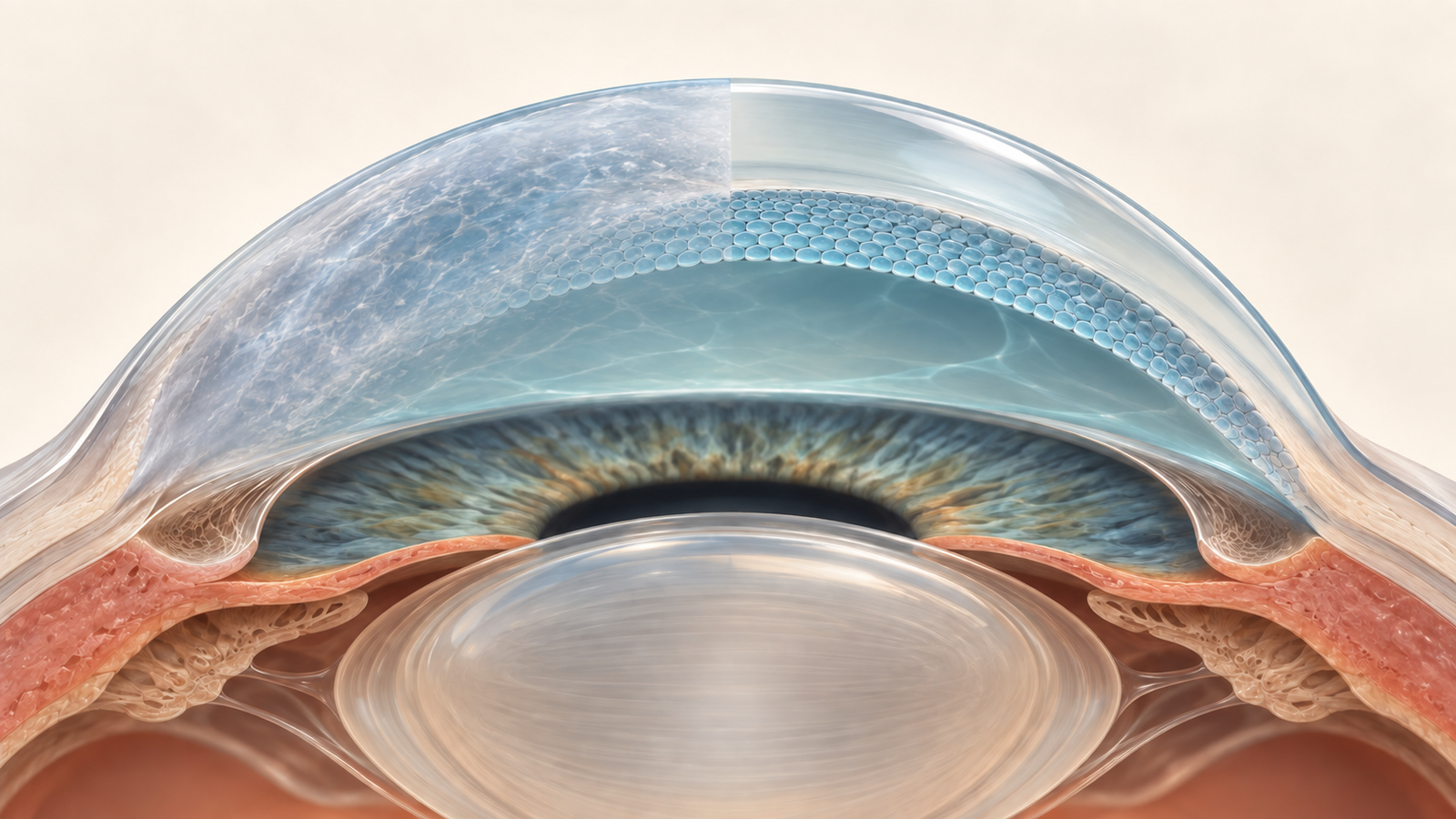
Two eyes received mature cultured endothelial cells after prototype grafts failed years later, testing whether the posterior cornea can accept a second cell layer.
Read long post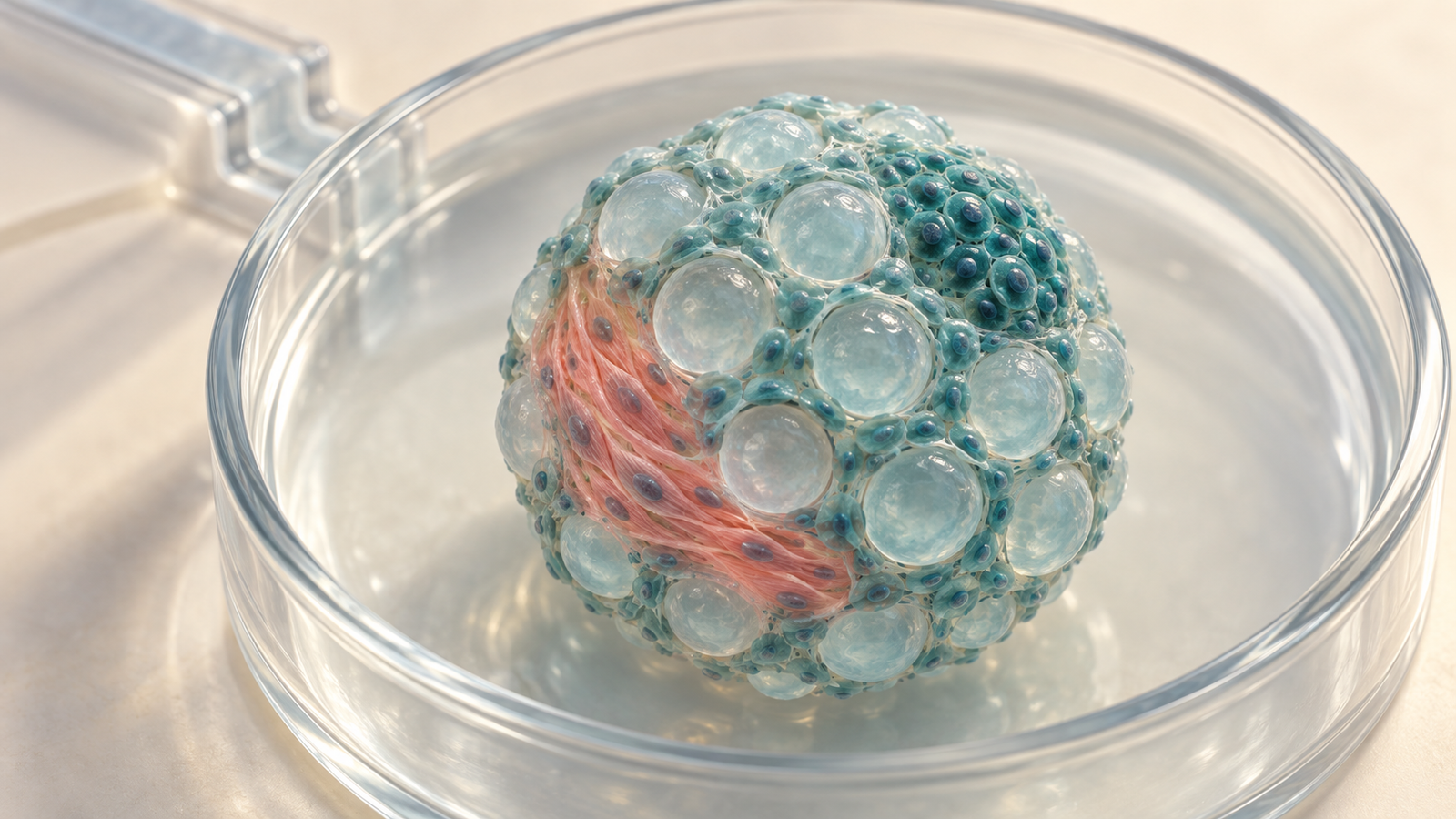
Vitronectin-coated PEG microgels support iPSC expansion and cardiac or retinal differentiation across millimeter-scale and automated multiwell formats.
Read long postEach issue collects the week's most relevant trial records, papers, regulatory updates, and company developments in one place.
Corneal cell retreatment, an infant brain-injury MSC trial, an iPSC microgel platform, Alzheimer’s organoid exosome profiling, infusion formulation, Ryoncil potency testing, and an ALS trial record.
Ten-year iPSC retinal-graft follow-up, Parkinson cell manufacturing, self-amplifying RNA, retinal MSC vesicles, MESEMS immune findings, a myelin model, and an Alzheimer’s preprint.
This issue covers glycocalyx-edited MSCs in osteoporosis, matrix-modified iPSC neural grafts after stroke, a preclinical audit of PSC vascular cells, two new controlled trial records, iPSC-cardiomyocyte spheres, and an iPSC-cardiomyocyte exosome platform.
This issue covers engineered neural stem cells after stroke, endometrial organoid transplantation, kidney tubule replacement, Parkinson MSC trial results, allele-specific epigenetic editing, a new hUC-MSC liver trial, and vascularized lung organoids.
This issue covers an APOE4 miBrain mechanism, a CLN3 retina organoid-RPE model, neural stem cells in a primate TBI study, SPP1-mediated microglial protection, two exosome trial records, and a shared Parkinson iPSC resource.
This issue covers the first randomized iPSC-cardiomyocyte trial, a Parkinson dopamine-cell study, two new hUC-MSC trials, hESC-derived stromal-cell safety testing, vascularized iPSC cell sheets, and airway basal-cell replacement.
This issue covers Rincell-1 in a cochlear-implant trial, acute and chronic stroke cell-therapy records, retinal RPE replacement, pediatric cerebral palsy MSCs, MultiStem MASTERS-2, and ALS iPSC-drug repurposing.
This issue covers stroke-focused MSC and secretome trial records, Parkinson cell-replacement comparison, human spinal interneurons in a rat SCI model, ALS extracellular vesicles, FTD iPSC-microglia, and hPSC differentiation quality.
A catch-up issue covering Parkinson and Huntington cell-replacement programs, iPSC spinal cord injury follow-up, chronic stroke trial design, retinal cell therapy, neonatal HIE MSCs, and CNS MSC records.
This week: FTD exosomes, two acute-stroke MSC trial records, retinal cell-therapy follow-up, Parkinson dopaminergic progenitors, Crohn’s extracellular vesicles, and a GMP-grade spinal cord injury paper.
This issue covers five-year NSI-566 follow-up, an Alzheimer’s exosome trial record, a small NMOSD MSC study, retinal replacement-cell development, iPSC disease models, and MSC product logic.
Longer notes on regulatory milestones, model-system papers, and clinical programs that remain useful after the weekly news cycle moves on.
A cytoplasmic RNA platform supports early neuronal programming and sustained optical measurements in cardiac spheroids, with selection, maturity, and version boundaries kept explicit.
A small mouse study links retinal electrical and structural protection to miR-486-3p and Lcn2, while leaving behavioral benefit, cargo necessity, and delivery unresolved.
A rat stroke study separates cell support from scar modification, then finds that only their combination leaves a detectable human neural-progenitor graft four weeks later.
A systematic review finds a consistent perfusion signal across 68 mouse studies, then tests whether the literature demonstrates the vessel-building mechanism used to justify translation.
A mouse stroke study connects Nrsn1 to Smarcc1-dependent neural stem-cell fate, then tests whether engineering that axis changes a transplanted graft and motor recovery.
Lineage-marked mouse endometrial organoids engraft after epithelial ablation, rebuild luminal and glandular compartments, and support pregnancy in transplanted uterine horns.
A six-cell human iPSC-derived brain model uses genotype swaps to connect APOE4 astrocyte cholesterol accumulation with lysosomal failure and neuronal alpha-synuclein pathology.
A human retinal organoid-RPE model localizes early CLN3 photoreceptor injury to mutant pigment epithelium and tests acid ceramidase rescue in culture and miniswine.
The first randomized human test of injected iPSC-derived cardiomyocytes pairs early functional improvements with ventricular arrhythmias, immune recognition, and an unresolved graft-persistence question.
A ferret airway study follows donor basal cells from niche creation through engraftment, multilineage differentiation, CFTR current, and mucus transport before a living-animal test.
Rincell-1 puts an otic neural progenitor-cell therapy into a first-in-human cochlear-implant trial, with safety, delivery, neural-health measurement, immunosuppression, and long follow-up all visible from the start.
B2065 enters acute ischemic stroke as a randomized placebo-controlled adipose-MSC trial, while the terminated MASTERS-2 record and TREASURE publication show why the field has to read stroke cell therapy carefully.
A Cell Stem Cell perspective argues that variation across Parkinson dopamine-cell therapy trials, patients, and graft sites may become one of the field’s central problems to solve.
A Science Translational Medicine paper uses human iPSC-derived V2a spinal interneurons to test whether transplanted cells can form a functional relay in an injured rat cervical spinal cord circuit.
STEM-PD, Kenai RNDP-001, and BlueRock bemdaneprocel show Parkinson dopaminergic cell replacement moving from isolated studies into a field readers can compare.
A Nature Medicine Phase 1 study reports 2-4 years of follow-up after direct iPSC-derived neural stem/progenitor cell transplantation in subacute cervical spinal cord injury.
hNPC01 long-term follow-up and a new CC-101 Phase 2 record show chronic stroke neural cell therapy moving toward longer observation and stronger controls.
Ruijin Hospital’s FTD trial record puts intranasal umbilical-cord MSC-derived exosomes into a three-arm Phase 1/2 design with placebo, two dose levels, and a disease-relevant clinical scale.
Two new acute ischemic stroke MSC trial records use randomized, masked, placebo-controlled designs, with different products, dose strategies, and endpoints.
A three-patient, five-year follow-up after direct NSI-566 neural stem cell implantation in chronic cervical spinal cord injury.
A recruiting Phase 1/2 trial record for intranasal umbilical-cord MSC-derived exosomes in mild-to-moderate Alzheimer’s disease.
Japan’s conditional approval and reimbursement path for Amchepry/raguneprocel marks a real step for iPSC-derived neural cell therapy.
A 2026 SNCA triplication midbrain organoid paper points to extracellular matrix remodeling before overt degeneration appears in the model.
iRegene’s NouvNeu001 has a U.S. Phase 1/2 trial record, sponsor-announced RMAT, and first U.S. dosing language.
Neurona’s rezanecel/NRTX-1001 has sponsor-reported open-label seizure-reduction data and a serious Phase 3 path.
The goal is to make each item readable now and still useful later, when results, follow-up, or regulatory updates arrive.
Use the newsletter for periodic scientific context. Book a consultation when a laboratory, GMP-readiness, R&D, due-diligence, or literature-review question needs direct advisory work.